419
Federal Aviation Administration, DOT
§ 25.533
§ 25.531
Hull and main float takeoff
condition.
For the wing and its attachment to
the hull or main float—
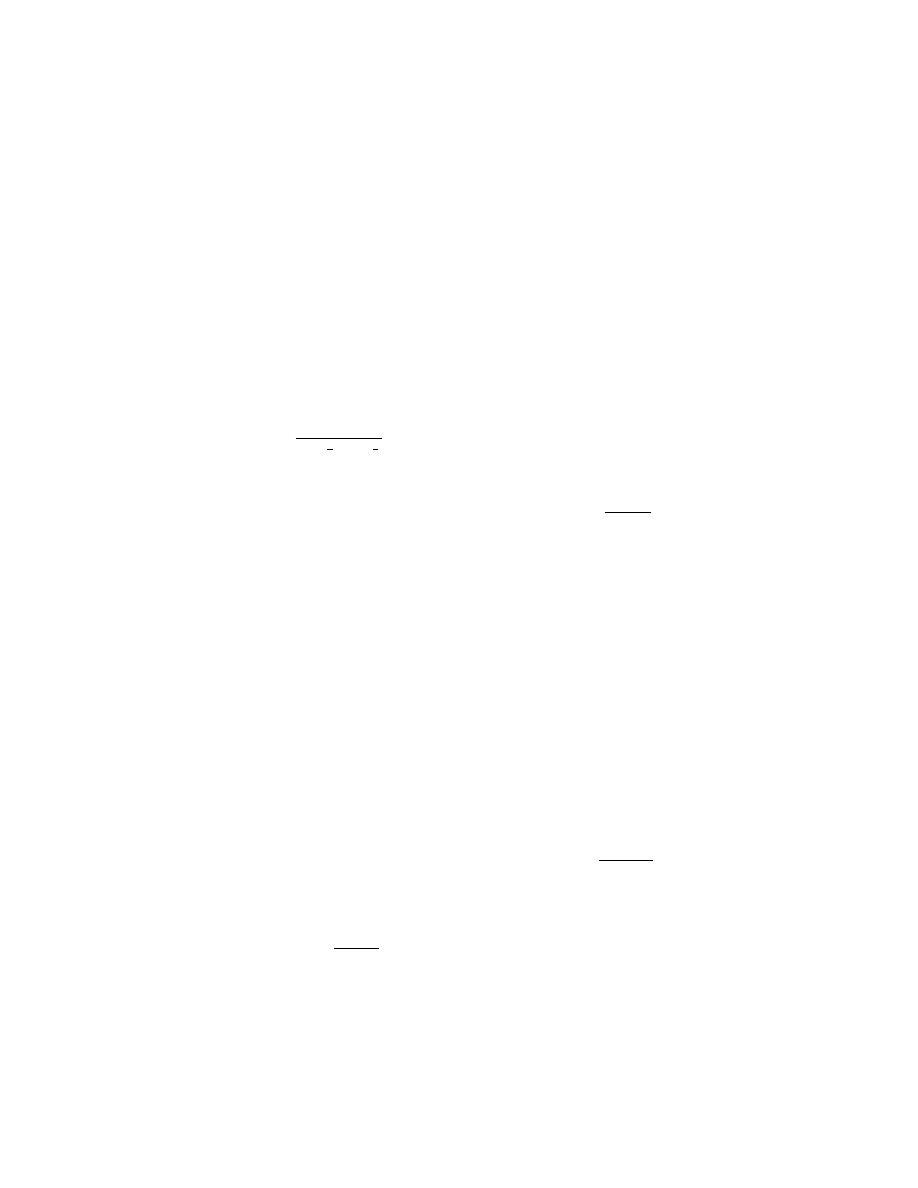
(a) The aerodynamic wing lift is as-
sumed to be zero; and
(b) A downward inertia load, cor-
responding to a load factor computed
from the following formula, must be
applied:
n
C
V
W
TO
S
=
⎛
⎝
⎞
⎠
1
2
2
3
1
3
tan
β
where—
n=inertia load factor;
C
TO
=empirical seaplane operations factor
equal to 0.004;
V
S1
=seaplane stalling speed (knots) at the de-
sign takeoff weight with the flaps ex-
tended in the appropriate takeoff posi-
tion;
b=angle of dead rise at the main step (de-
grees); and
W=design water takeoff weight in pounds.
[Doc. No. 5066, 29 FR 18291, Dec. 24, 1964, as
amended by Amdt. 25–23, 35 FR 5673, Apr. 8,
1970]
§ 25.533
Hull and main float bottom
pressures.
(a)
General. The hull and main float
structure, including frames and bulk-
heads, stringers, and bottom plating,
must be designed under this section.
(b)
Local pressures. For the design of
the bottom plating and stringers and
their attachments to the supporting
structure, the following pressure dis-
tributions must be applied:
(1) For an unflared bottom, the pres-
sure at the chine is 0.75 times the pres-
sure at the keel, and the pressures be-
tween the keel and chine vary linearly,
in accordance with figure 3 of appendix
B. The pressure at the keel (psi) is
computed as follows:
P
C
K V
k
S
k
=
×
2
2
1
2
tan
β
where—
P
k
=pressure (p.s.i.) at the keel;
C
2
=0.00213;
K
2
=hull station weighing factor, in accord-
ance with figure 2 of appendix B;
V
S1
=seaplane stalling speed (Knots) at the de-
sign water takeoff weight with flaps ex-
tended in the appropriate takeoff posi-
tion; and
b
K
=angle of dead rise at keel, in accordance
with figure 1 of appendix B.
(2) For a flared bottom, the pressure
at the beginning of the flare is the
same as that for an unflared bottom,
and the pressure between the chine and
the beginning of the flare varies lin-
early, in accordance with figure 3 of ap-
pendix B. The pressure distribution is
the same as that prescribed in para-
graph (b)(1) of this section for an
unflared bottom except that the pres-
sure at the chine is computed as fol-
lows:
P
C
K V
ch
S
=
×
3
2
1
2
tan
β
where—
P
ch
=pressure (p.s.i.) at the chine;
C
3
=0.0016;
K
2
=hull station weighing factor, in accord-
ance with figure 2 of appendix B;
V
S1
=seaplane stalling speed at the design
water takeoff weight with flaps extended
in the appropriate takeoff position; and
b=angle of dead rise at appropriate station.
The area over which these pressures
are applied must simulate pressures oc-
curring during high localized impacts
on the hull or float, but need not ex-
tend over an area that would induce
critical stresses in the frames or in the
overall structure.
(c)
Distributed pressures. For the de-
sign of the frames, keel, and chine
structure, the following pressure dis-
tributions apply:
(1) Symmetrical pressures are com-
puted as follows:
P
C
K V
S
=
×
4
2
0
2
tan
β
where—
P=pressure (p.s.i.);
C
4
=0.078
C
1
(with
C
1
computed under § 25.527);
K
2
=hull station weighing factor, determined
in accordance with figure 2 of appendix
B;
V
S0
=seaplane stalling speed (Knots) with
landing flaps extended in the appropriate
position and with no slipstream effect;
and
V
S0
=seaplane stalling speed with landing
flaps extended in the appropriate posi-
tion and with no slipstream effect; and
b=angle of dead rise at appropriate sta-
tion.
VerDate Mar<15>2010
10:12 Mar 18, 2014
Jkt 232046
PO 00000
Frm 00429
Fmt 8010
Sfmt 8010
Y:\SGML\232046.XXX
232046
EC28SE91.038</MATH>
EC28SE91.039</MATH>
EC28SE91.040</MATH>
EC28SE91.041</MATH>
pmangrum on DSK3VPTVN1PROD with CFR